

The Real Problem Isn’t Excel Itself
This surprised me early on while working with retail operations teams.
The issue usually isn’t the spreadsheet tool.
The issue is what businesses are asking spreadsheets to do.
There’s a point where operational complexity outgrows manual coordination. Most companies don’t notice the exact moment it happens. They just start feeling constant friction:
- allocation delays,
- mismatched stock,
- reporting confusion,
- duplicated work,
- version conflicts,
- emergency corrections.
People compensate by working longer hours.
Someone always becomes “the allocation person.” The one employee everybody depends on because they understand the formulas nobody else wants to touch.
That dependency becomes risky fast.
One leave day. One formula mistake. One outdated upload. One accidental overwrite.
Operations slow down immediately.
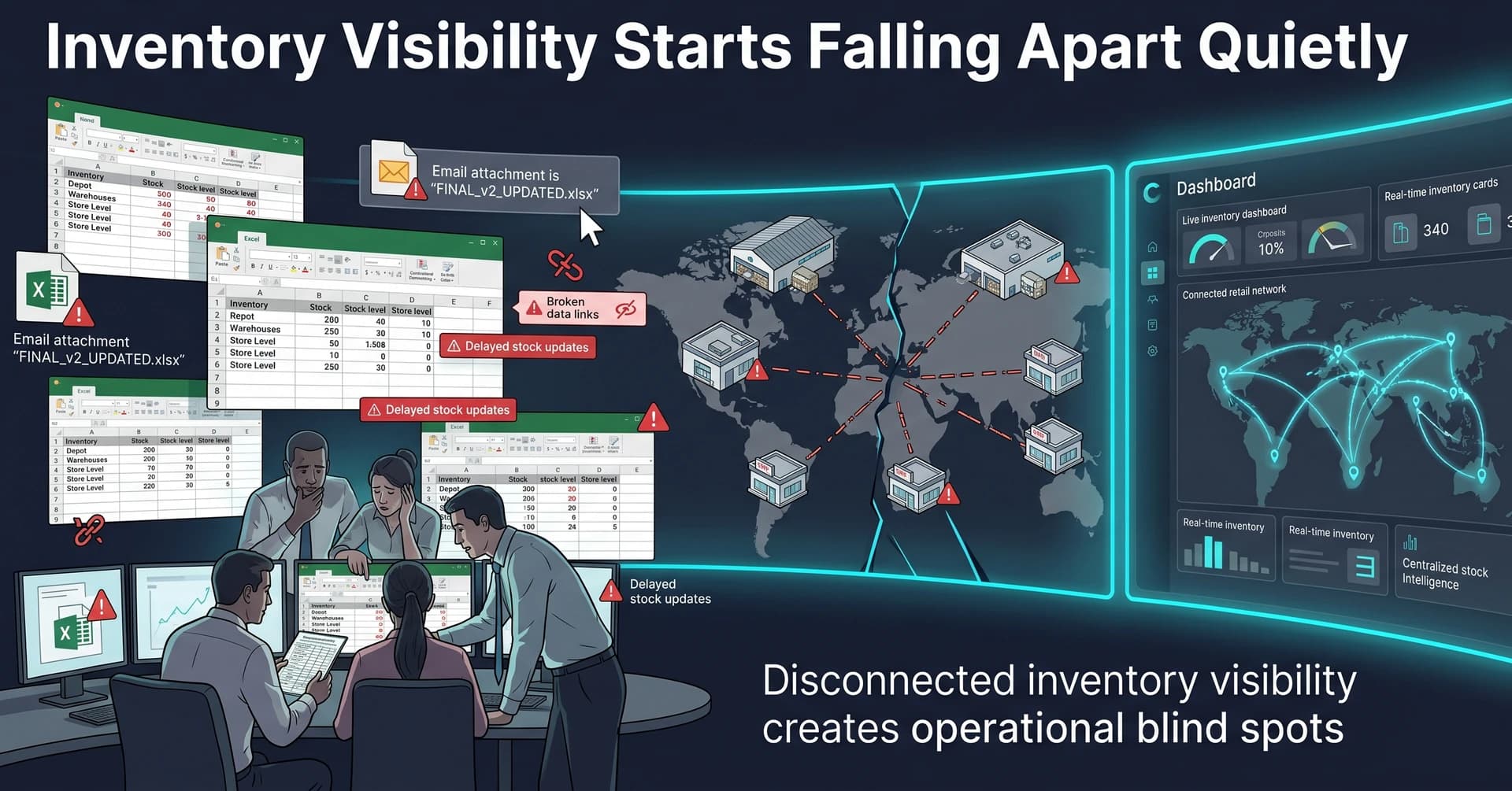
Inventory Visibility Starts Falling Apart Quietly
One of the biggest issues with spreadsheet-driven allocation is visibility.
Or rather, the illusion of visibility.
Teams think they know current stock positions because they have reports. But most of those reports are already outdated by the time decisions are being made.
A depot exports stock at 9 AM.
Sales update at 11 AM.
A manual allocation adjustment happens at 1 PM.
Another team modifies store requirements in a separate file.
By evening, nobody is fully confident which number is actually correct.
I’ve seen businesses spend entire meetings debating whose spreadsheet is “latest.”
That’s not an inventory strategy. That’s operational survival.
And once retail operations become reactive instead of visible, inventory problems start multiplying:
- stores receiving excess stock,
- fast-moving locations running empty,
- delayed replenishment,
- inconsistent allocation decisions,
- rising dead inventory.
The frustrating part is this often happens even when companies already have good sales 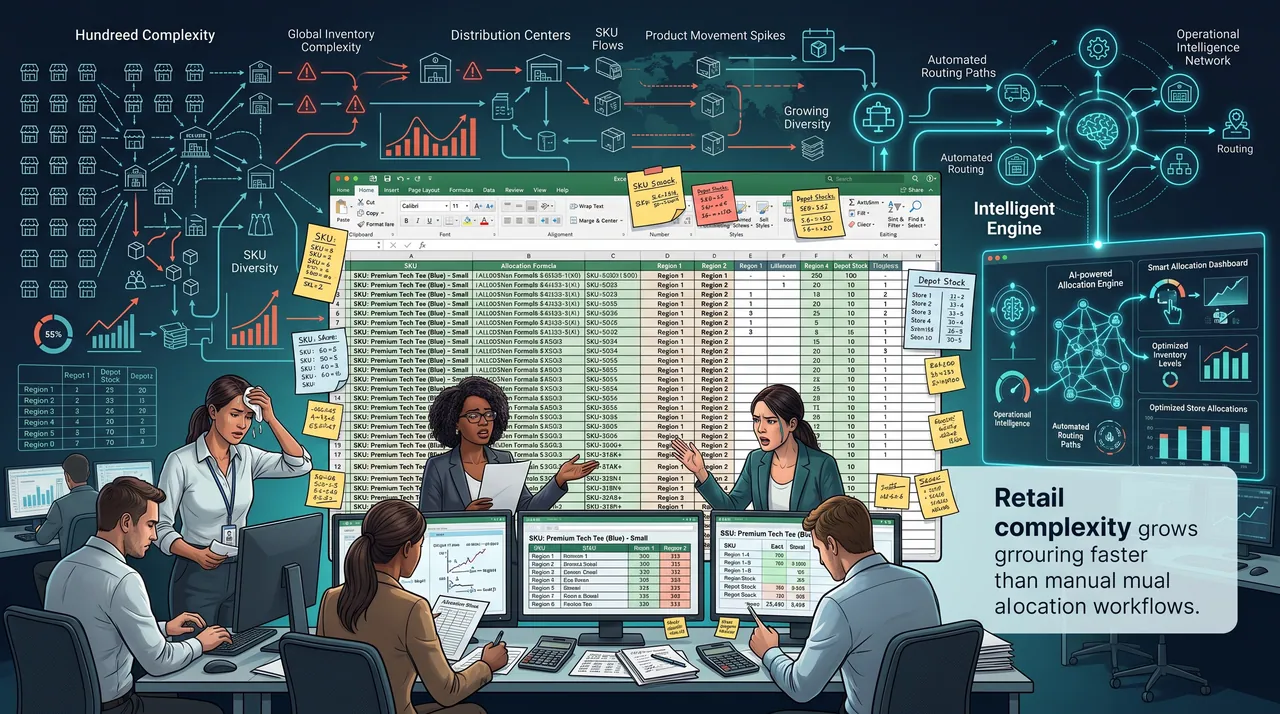
The data exists. It’s just disconnected.
Manual Allocation Logic Doesn’t Scale
A lot of retail allocation still depends on experience-based judgment.
Someone knows:
- which stores sell better,
- which regions move faster,
- which SKUs need priority,
- which stores over-order,
- which products behave seasonally.
That knowledge is valuable.
But relying entirely on human memory and spreadsheet manipulation becomes dangerous as scale increases.
Because eventually:
- SKU counts grow,
- allocation frequency increases,
- product categories expand,
- and inventory movement becomes too dynamic for manual handling.
Retail distribution moves quickly now.
Operations teams don’t always have hours to manually compare:
- depot stock,
- sales history,
- store rankings,
- stock limits,
- product bands,
- replenishment cycles.
Yet many teams still do exactly that every day.
Spreadsheet Errors Are More Expensive Than People Think
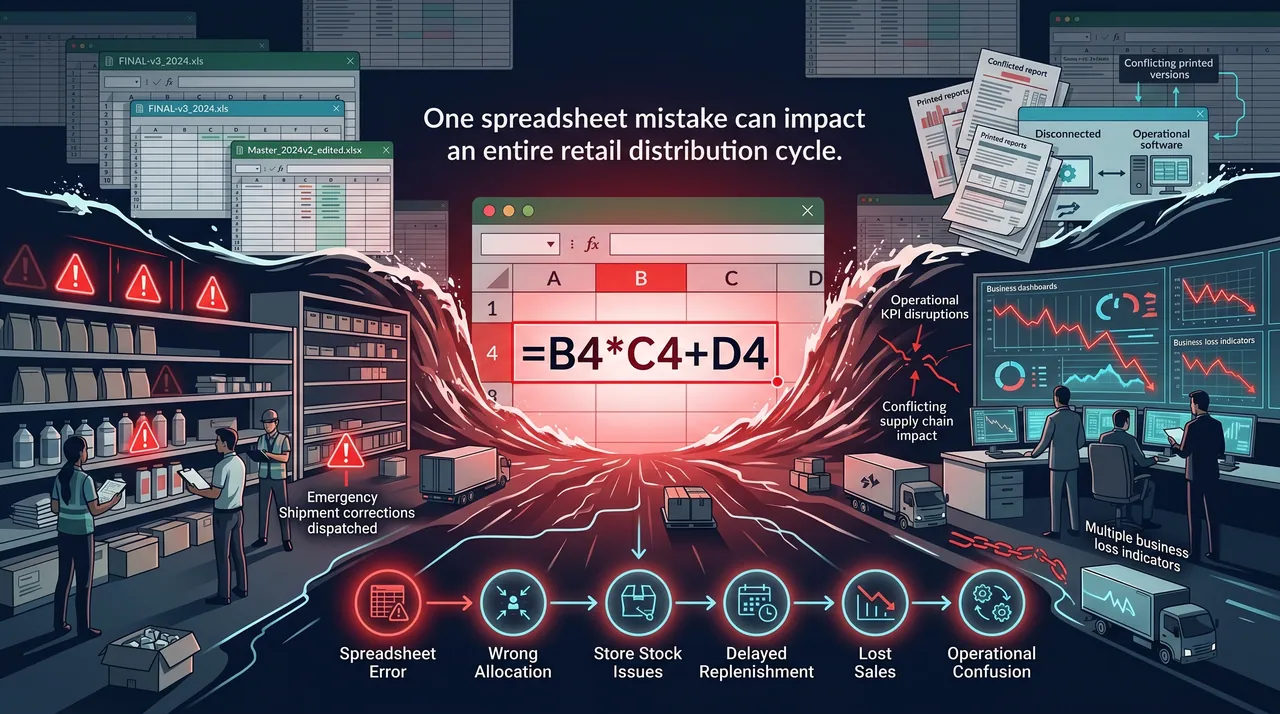
A small formula issue can create:
- over-allocation,
- stock shortages,
- duplicate replenishment,
- warehouse confusion,
- shipment corrections.
One retailer I spoke with had two regional teams updating separate versions of the same allocation file for almost half a day before anyone realized the mismatch.
That’s not unusual.
The bigger problem is that spreadsheets rarely provide operational governance:
- no real audit trail,
- no allocation history visibility,
- no centralized business rules,
- no role-based operational controls.
So allocation becomes dependent on process discipline rather than system intelligence.
And humans are inconsistent under pressure.
---Retail Distribution Is Moving Toward Operational Intelligence
Retail Operations Have Changed Faster Than Allocation Processes
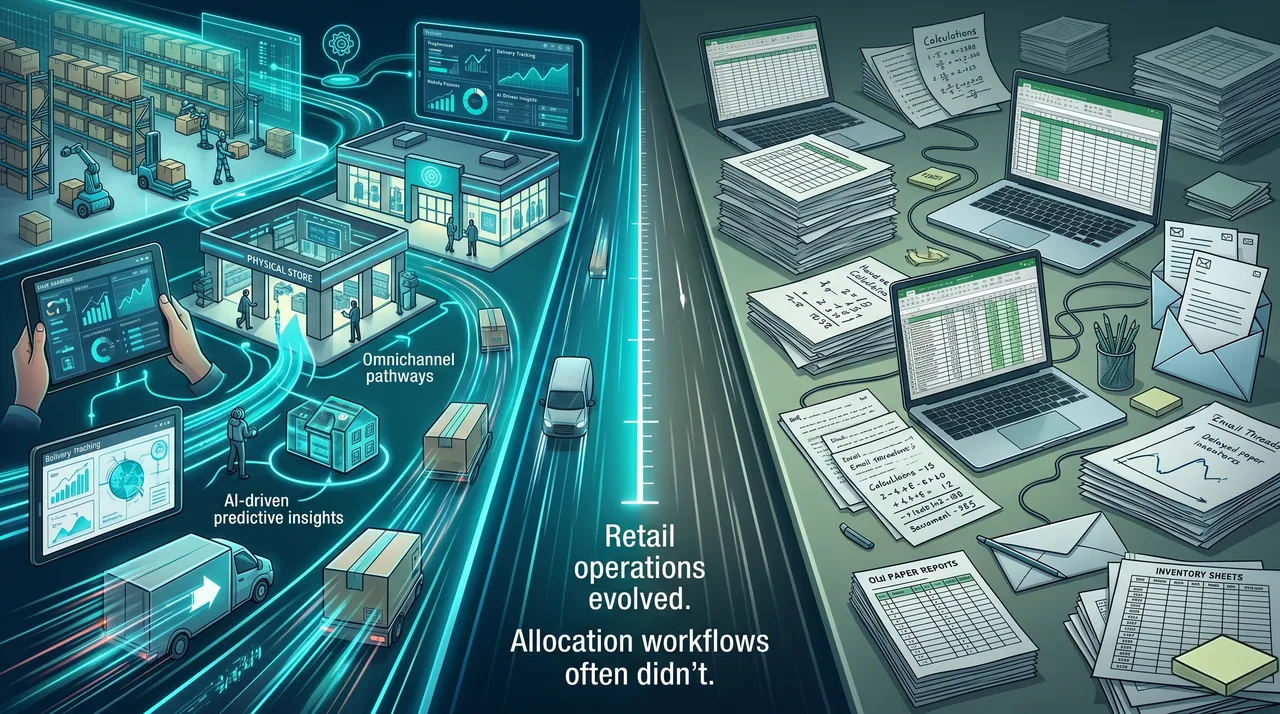
Retail operations today are operating at a completely different speed than they were even 5–7 years ago.
Customer expectations changed.
Inventory cycles became faster.
Omnichannel pressure increased.
Seasonality became less predictable.
Supply chain volatility became normal.
Yet many allocation workflows still operate like it’s 2012.
Teams are trying to manage modern distribution complexity using tools originally designed for lightweight analysis.
That mismatch creates operational drag everywhere.
What Modern Retail Businesses Actually Need
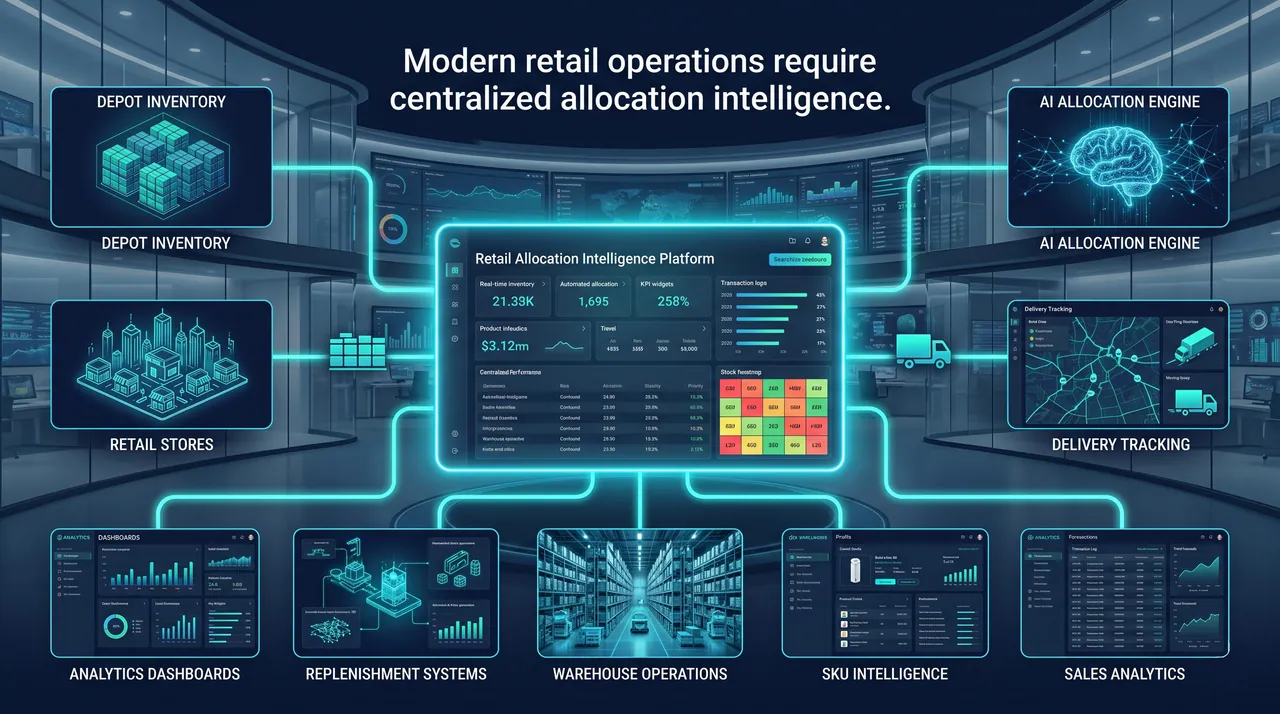
From what I’ve seen, growing retail organizations eventually reach a point where they need centralized allocation intelligence — not just better spreadsheets.
There’s a difference.
Modern retail operations need systems that can:
- centralize inventory visibility,
- automate allocation logic,
- apply business rules consistently,
- prioritize stores intelligently,
- track replenishment movements,
- monitor delivery status,
- and provide real-time operational dashboards.
Not because automation sounds impressive.
Because manual coordination eventually becomes unsustainable.
The businesses handling retail distribution most effectively today are usually the ones treating allocation as an operational intelligence function rather than a spreadsheet task.
That shift matters.
A lot.
Allocation Decisions Should Be Data-Driven, Not Spreadsheet-Driven
all exist in one connected ecosystem.
Once that happens:
- allocation becomes faster,
- replenishment improves,
- inventory balancing gets smarter,
- operational visibility increases,
- and teams spend less time chasing data.
Frankly, many businesses don’t even realize how much operational energy is wasted managing disconnected allocation workflows until they finally centralize them.
The difference becomes obvious almost immediately.
Retail Distribution Is Moving Toward Operational Intelligence
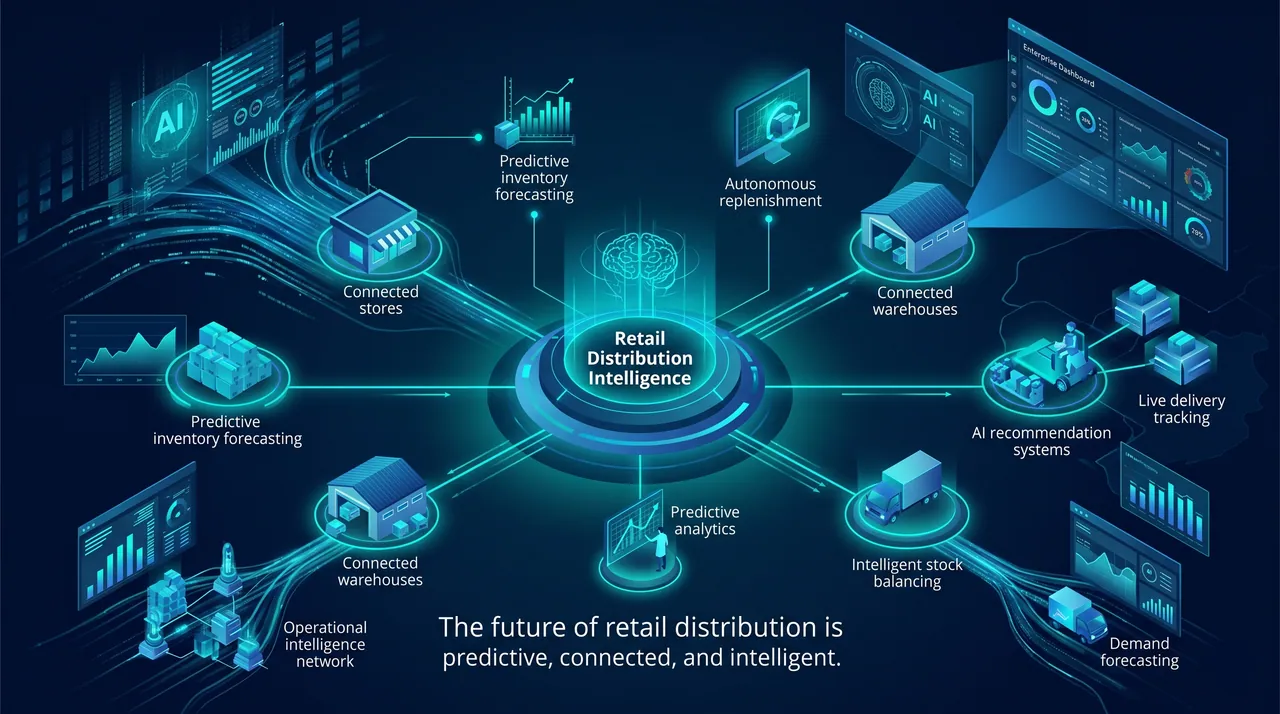
The future probably won’t belong to businesses running allocation entirely through manual sheets and disconnected files.
Retail operations are becoming:
- more predictive,
- more automated,
- more data-driven,
- and more connected.
We’re already seeing growing interest in:
- allocation intelligence,
- predictive replenishment,
- AI-driven forecasting,
- centralized inventory ecosystems,
- real-time retail analytics.
And honestly, this shift feels inevitable.
Because once retail complexity reaches a certain scale, operational visibility stops being optional.
It becomes infrastructure.
The companies adapting early will likely build faster, more resilient retail operations over the next few years.
The ones still managing large-scale allocation through spreadsheets alone may find themselves spending more time fixing operational friction than actually improving distribution performance.
That gap is only getting wider.