


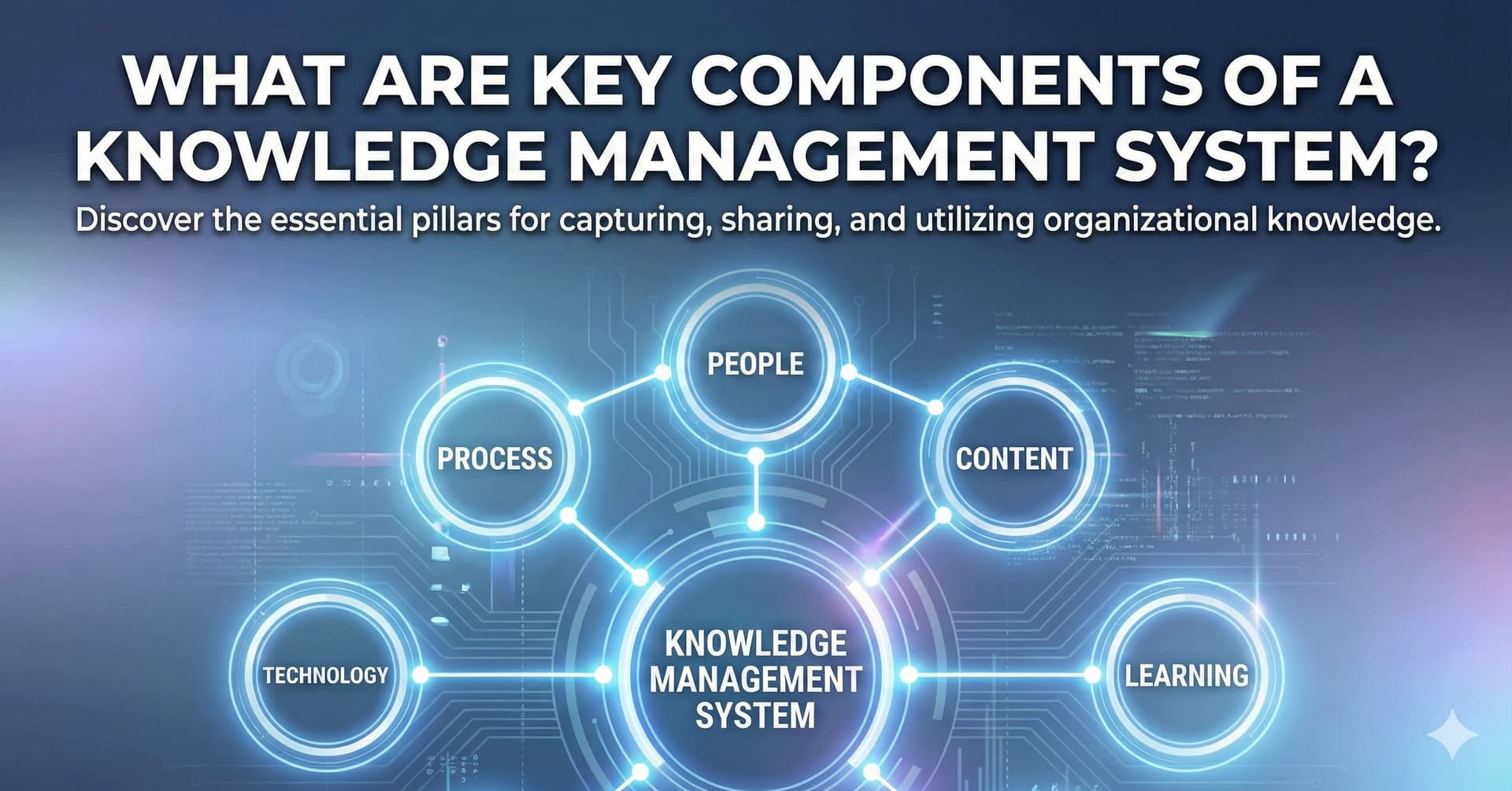
A Knowledge Management System (KMS) is a comprehensive framework that enables organizations to capture, organize, store, retrieve, and share knowledge effectively. Understanding the key components of a KMS is essential for building a robust system that drives organizational success.
-
- Knowledge Capture
Knowledge capture is the process of collecting information from various sources including documents, databases, experts, and organizational experiences. This component ensures that valuable knowledge is documented and preserved for future use.
-
- Knowledge Representation
Knowledge representation involves structuring and organizing captured knowledge in a way that makes it easily understandable and accessible. This includes creating taxonomies, ontologies, and metadata frameworks.
-
- Knowledge Access
This component provides users with the ability to search, browse, and retrieve relevant knowledge when needed. Effective access mechanisms include search engines, knowledge portals, and intuitive navigation systems.
-
- Knowledge Dissemination
Knowledge dissemination focuses on distributing knowledge to the right people at the right time. This includes notification systems, knowledge sharing platforms, and collaboration tools.
-
- Knowledge Reuse
Knowledge reuse enables organizations to leverage existing knowledge for solving new problems or making decisions. This component includes best practices repositories and lessons learned databases.
-
- Knowledge Feedback
Feedback mechanisms allow users to rate, comment on, and improve knowledge assets. This continuous improvement cycle ensures knowledge remains relevant and accurate.
-
- Knowledge Storage
Robust storage infrastructure is essential for maintaining knowledge assets. This includes databases, document management systems, and cloud storage solutions.
-
- Knowledge Organization
Effective organization involves categorizing and classifying knowledge using consistent structures, taxonomies, and metadata schemas.
-
- Knowledge Validation
Validation processes ensure that knowledge is accurate, reliable, and up-to-date. This includes review workflows and quality control mechanisms.
-
- Knowledge Security
Security components protect sensitive knowledge through access controls, encryption, and authentication mechanisms.
-
- User Interface
An intuitive user interface makes it easy for users to interact with the KMS, contributing to higher adoption rates and better knowledge sharing.
-
- Search and Retrieval
Advanced search capabilities including full-text search, semantic search, and faceted search help users find relevant knowledge quickly.
-
- Collaboration Tools
Collaboration features such as wikis, forums, and discussion boards facilitate knowledge sharing and co-creation among users.
-
- Content Management
Content management capabilities handle the lifecycle of knowledge assets from creation through archival or deletion.
-
- Analytics and Reporting
Analytics tools provide insights into knowledge usage patterns, identifying gaps and opportunities for improvement.
-
- Integration Capabilities
Integration with other enterprise systems ensures seamless knowledge flow across the organization.
-
- Workflow Management
Workflow engines automate knowledge-related processes such as review, approval, and publication.
-
- Version Control
Version control tracks changes to knowledge assets over time, enabling users to access previous versions when needed.
-
- Social Features
Social networking features like tagging, commenting, and following enable community-driven knowledge sharing.
-
- Mobile Access
Mobile-friendly interfaces ensure users can access knowledge anytime, anywhere.
-
- Personalization
Personalization features deliver relevant knowledge to users based on their roles, preferences, and behaviors.
-
- Knowledge Mapping
Knowledge mapping visualizes relationships between knowledge assets and expertise within the organization.
-
- Expert Location
Expert locator systems help users find subject matter experts who can provide additional insights or guidance.
-
- Training and Support
Comprehensive training programs and support resources ensure users can effectively utilize the KMS.
-
- AI and Machine Learning
Artificial intelligence and machine learning enhance KMS capabilities through automated tagging, content recommendations, and intelligent search.
-
- Governance Framework
A governance framework establishes policies, standards, and procedures for managing knowledge assets throughout their lifecycle.
Conclusion
A comprehensive Knowledge Management System integrates all these components to create a powerful platform for organizational learning and knowledge sharing. By understanding and implementing these key components, organizations can build KMS solutions that drive innovation, improve decision-making, and enhance competitive advantage. The success of a KMS depends on careful consideration of each component and how they work together to support organizational goals and user needs.