


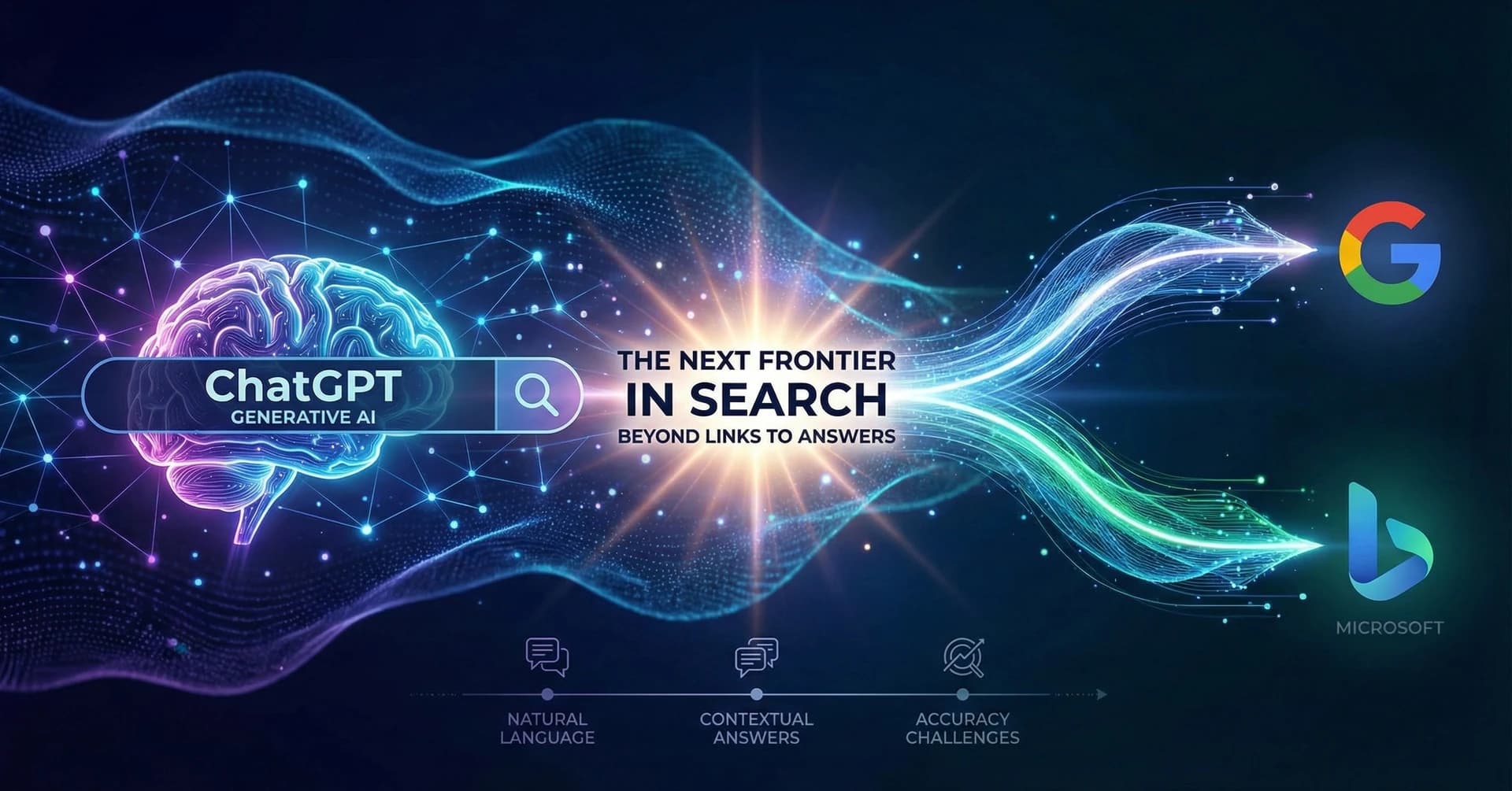
The emergence of ChatGPT, OpenAI's large language model, has sparked immense excitement about the potential of generative AI to revolutionize knowledge, research, and content creation. Among the many potential applications of generative AI, search stands out as an area with enormous promise. With the ability to fundamentally alter users' expectations of search, generative AI could very well be the next frontier in this space. For years, Google has dominated search, but it now faces a formidable new challenger in Microsoft, which recently invested a staggering $10 billion in OpenAI and intends to incorporate the technology into various Microsoft products, including Bing.
The Promise of Generative AI in Search
Generative AI has the potential to transform search by providing more conversational, contextual, and comprehensive answers to user queries. Rather than simply returning a list of links, AI-powered search engines can synthesize information from multiple sources and present it in a coherent, easy-to-understand format.
Technical and Legal Challenges
Despite its promise, generative AI faces several significant challenges:
Technical Challenges
- Accuracy and hallucinations: AI models sometimes generate false or misleading information
- Computational costs: Running large language models requires substantial computing resources
- Real-time information: Keeping AI models updated with the latest information
Legal Challenges
- Copyright concerns: Questions about using copyrighted content for training
- Attribution: How to properly credit original sources
- Liability: Who is responsible when AI provides incorrect information
The Future of Search
As generative AI continues to evolve, we can expect:
- More natural language interactions
- Better understanding of user intent
- More comprehensive and contextual answers
- Integration with existing search platforms
The competition between traditional search engines and AI-powered alternatives will likely drive innovation and improvement across the industry, ultimately benefiting users with better tools for finding and understanding information.