


1. Why Cancer Detection Needs a Technological Reset
The growing pressure on traditional diagnostic systems
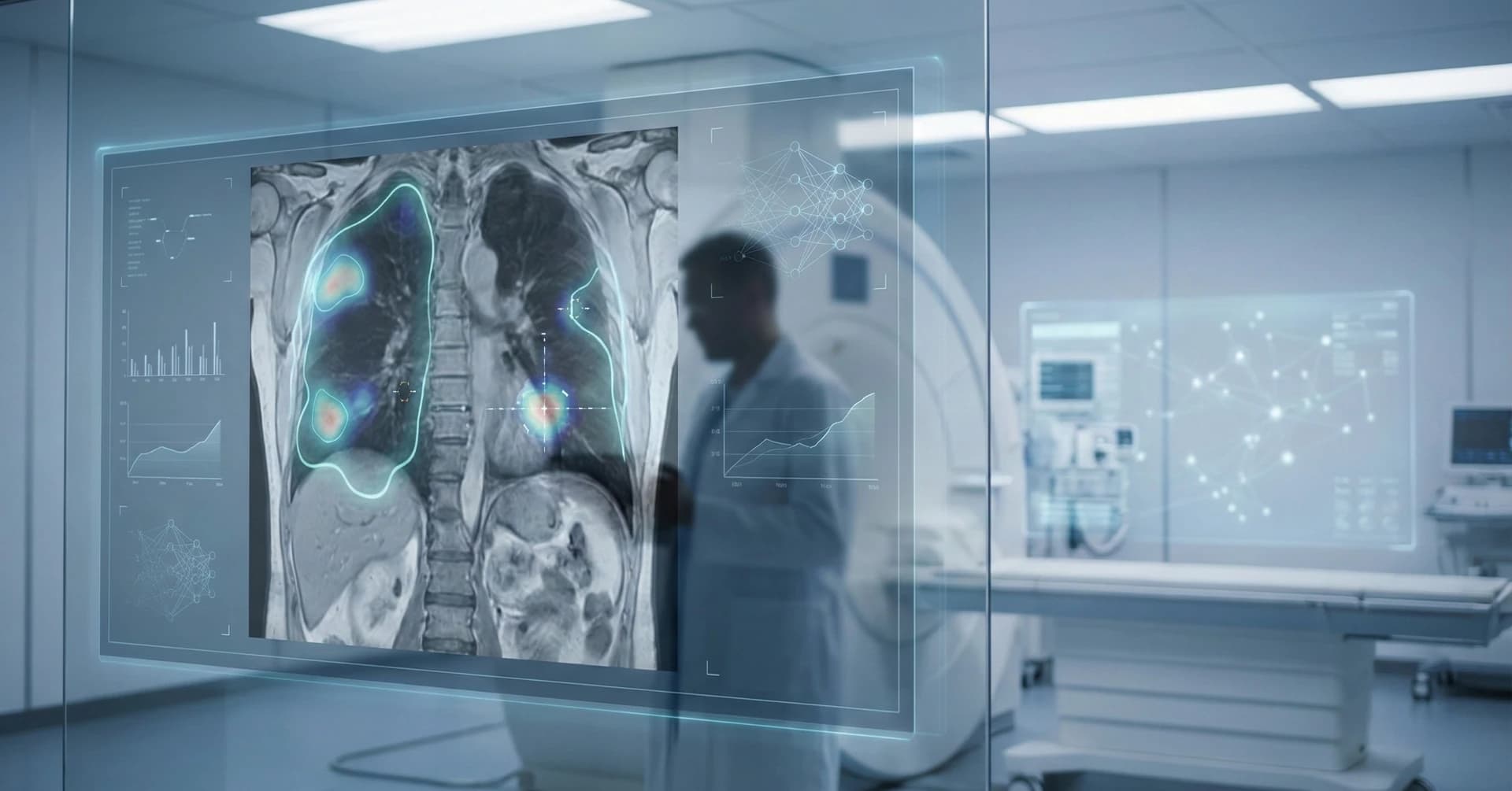
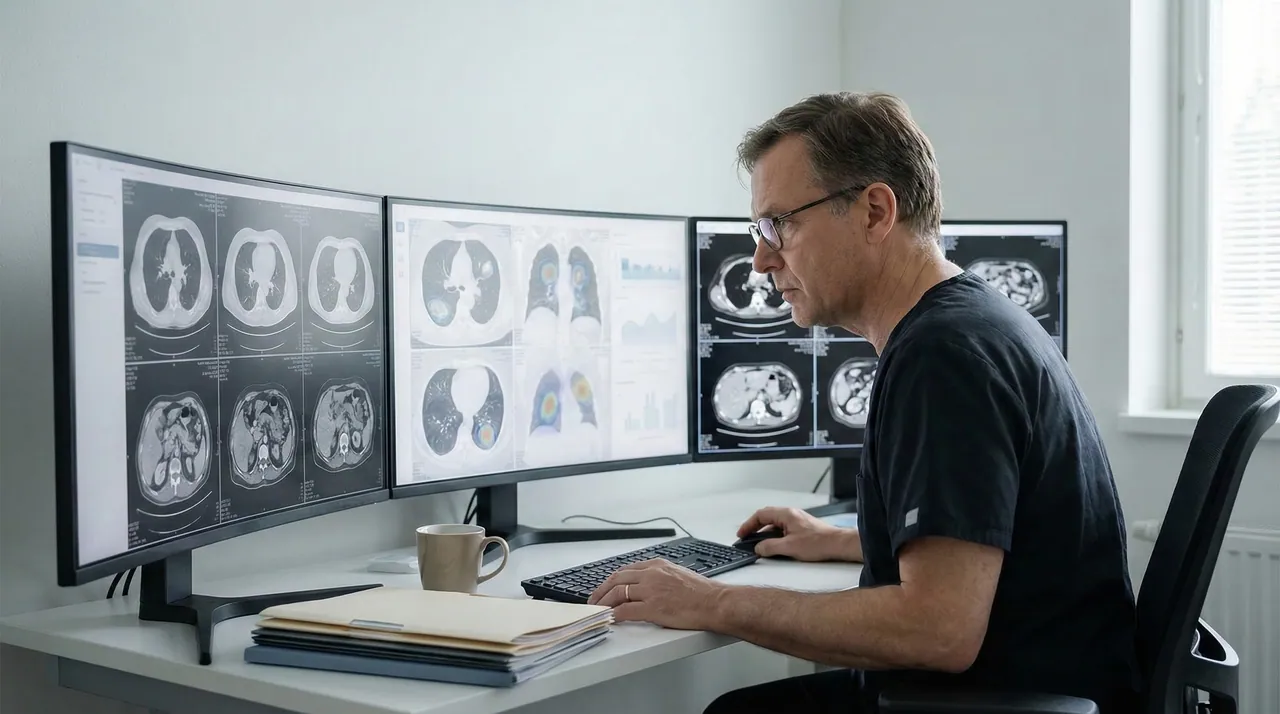
Cancer diagnosis today is constrained not by a lack of imaging technology, but by the growing gap between data volume and human capacity. Modern imaging systems produce high-resolution scans and detailed pathology slides, yet clinicians are expected to interpret this information under increasing time and workload pressures.
Radiologists and pathologists remain central to diagnosis, but even the most experienced professionals face practical limits when reviewing thousands of images daily.
The challenge of early-stage detection
Early cancer indicators are often subtle:
- Minor tissue irregularities
- Faint structural patterns
- Early cellular-level changes
These signals can blend into normal variation, becoming obvious only in hindsight—once the disease has advanced. This is not a failure of expertise, but a limitation of manual interpretation at scale.
Why a new approach is necessary
Healthcare systems now require tools that can:
- Analyze large image volumes consistently
- Detect patterns across populations, not isolated cases
- Support earlier, more confident decision-making
AI-powered image analysis addresses these needs by adding a layer of intelligence designed for scale and precision.
What this means for healthcare innovators
For healthcare innovators, AI is not a replacement for clinicians. It is a complementary intelligence layer—one that strengthens diagnostic workflows and enables earlier intervention. This marks a shift from reactive detection to proactive, data-driven cancer diagnostics.
2. What AI-Powered Image Analysis Means in a Healthcare Context
Defining AI-powered image analysis
AI-powered image analysis refers to the application of machine learning models—particularly deep learning—to interpret medical images such as:
- CT, MRI, PET, and X-ray scans
- Histopathology and pathology slides
- Digital microscopy images
These systems learn directly from data rather than relying on predefined rules.
How AI “sees” medical images
Instead of focusing on obvious visual markers, AI models analyze:
- Pixel-level variations
- Spatial relationships within tissues
- Patterns repeated across thousands of similar cases
Over time, the system learns which visual features correlate with disease presence, progression, or risk.
Why AI differs from traditional software
Traditional diagnostic software follows static logic. AI systems evolve:
- They improve as more data becomes available
- They adapt to new imaging patterns
- They maintain analytical consistency regardless of workload or fatigue
This consistency is especially valuable in environments where diagnostic variability can impact outcomes.
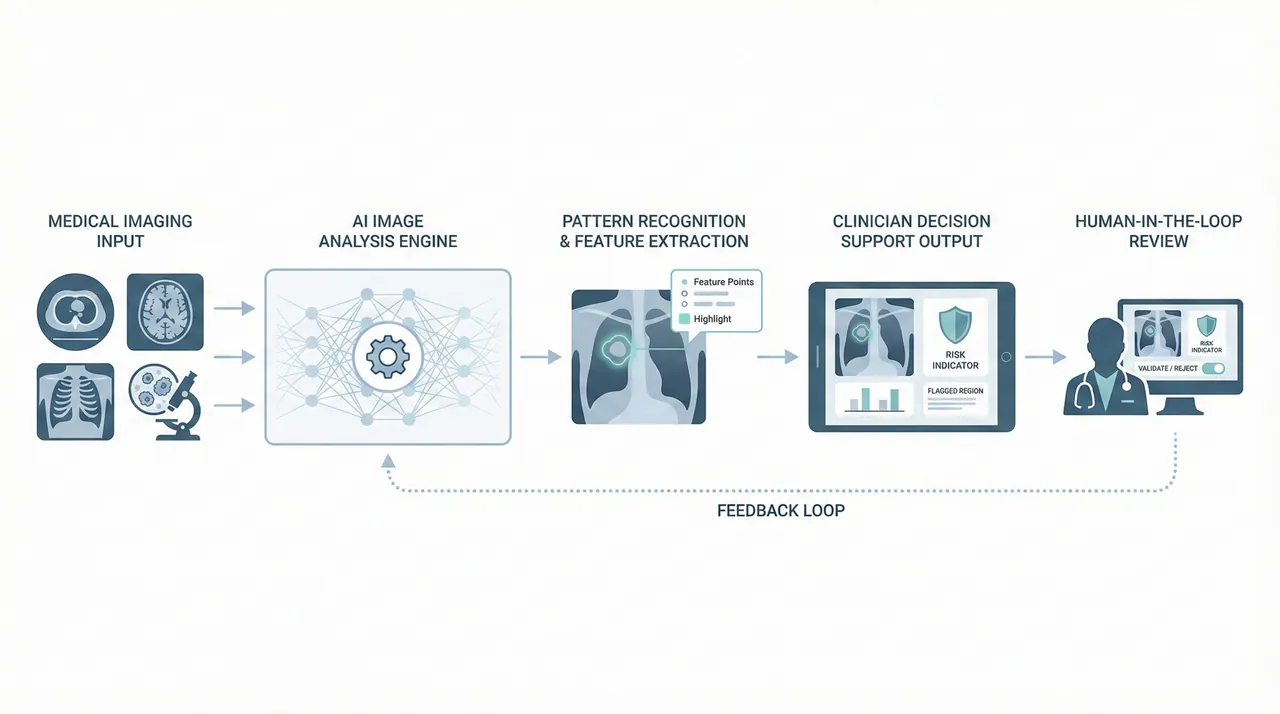
AI as a clinical decision-support layer
In real-world use, AI does not replace medical judgment. Instead, it:
- Highlights regions of concern
- Prioritizes high-risk cases
- Provides quantitative confidence scores
Clinicians remain in control, supported by insights that enhance speed and accuracy without increasing cognitive load.
3. How AI Is Actively Transforming Cancer Detection Today
Improving early screening and detection
AI systems are increasingly effective at identifying early-stage cancer indicators that may be difficult to detect visually. These include small lesions and subtle tissue changes that often appear before symptoms develop.
Supporting diagnostic accuracy
In diagnostic workflows, AI helps:
- Distinguish benign from malignant findings
- Reduce uncertainty in ambiguous cases
- Provide consistency across multiple reviewers
By comparing new images against patterns learned from large datasets, AI can flag suspicious areas with supporting context.
Enhancing staging and disease monitoring
AI-powered analysis is also used to:
- Track tumor progression across time
- Monitor treatment response
- Detect early signs of recurrence
Subtle changes across sequential scans can be identified sooner, allowing for timely clinical decisions.
From research to clinical reality
These capabilities are no longer experimental. They are already being applied in research hospitals, oncology centers, and controlled clinical environments. For innovators, the takeaway is clear: AI-powered cancer detection is now a practical, deployable capability—not a future promise.
4. How AI Cancer Imaging Systems Work Behind the Scenes
Step 1: Data ingestion and standardization
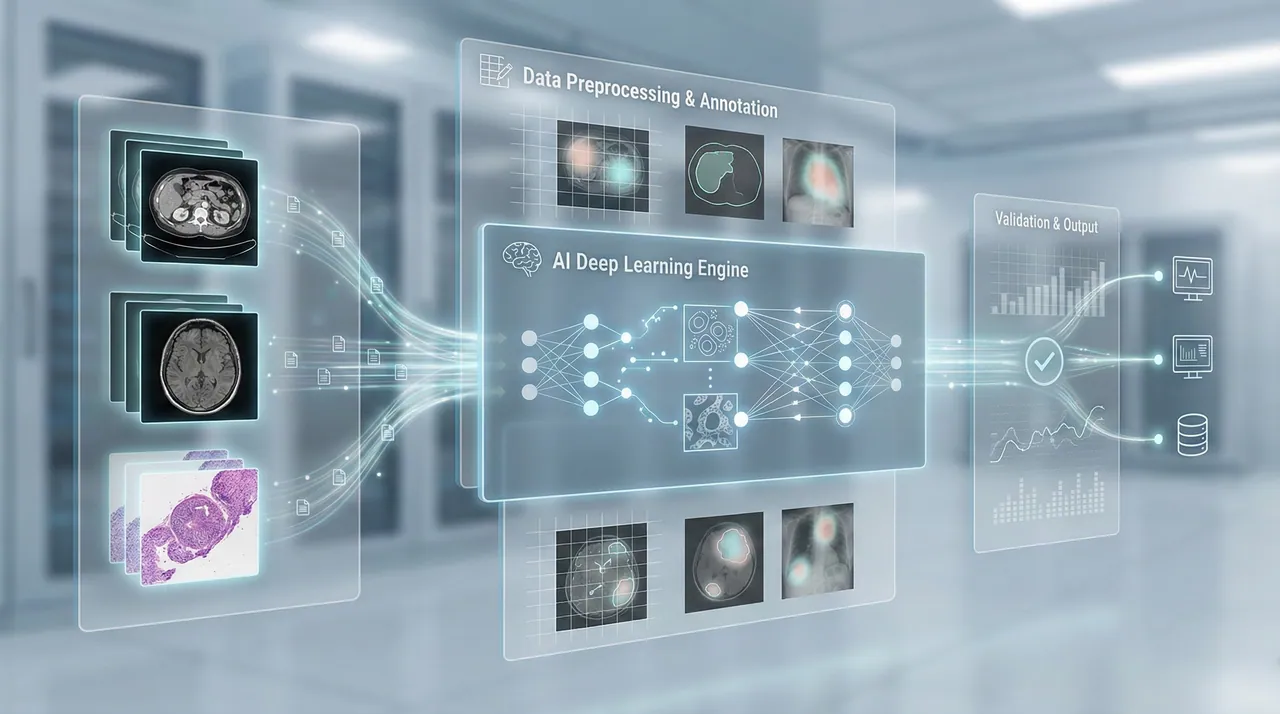
AI systems begin by collecting medical images from various sources. These images must be standardized to ensure consistency across formats, resolutions, and imaging devices. Without this step, model accuracy can degrade quickly.
Step 2: Annotation and preprocessing
Images are annotated—often with clinician involvement—to identify areas of interest. Preprocessing techniques then:
- Enhance image clarity
- Normalize visual features
- Reduce noise and artifacts
This prepares the data for effective learning.
Step 3: Model training and validation
Deep learning models are trained to associate visual patterns with clinical outcomes. Rigorous validation ensures:
- Reliability across diverse patient populations
- Reduced bias and false positives
- Stable performance in real-world conditions
Continuous testing and retraining are essential to long-term success.
Step 4: Integration into healthcare workflows
Finally, AI insights are integrated into existing systems such as:
- PACS (Picture Archiving and Communication Systems)
- Electronic Health Records (EHRs)
- Clinical decision-support platforms
The goal is seamless adoption, where AI enhances workflows without disrupting established clinical processes.
Why architecture matters for innovators
Behind every successful AI imaging solution lies more than an algorithm. Robust data pipelines, secure infrastructure, regulatory awareness, and ongoing model governance determine whether an AI system remains a pilot—or becomes a trusted clinical tool.
5. The Role of Data: Imaging, Genomics, and Multimodal AI
Why data quality determines AI effectiveness
AI systems are only as reliable as the data they are trained on. In cancer imaging, this extends beyond image volume to include consistency, diversity, and clinical relevance. Poorly curated datasets can lead to biased predictions and unreliable outcomes.
High-quality data enables AI models to learn meaningful patterns rather than artifacts or noise.
Types of data used in AI-powered cancer detection
Modern AI systems rely on multiple data sources, including:
- Radiology images such as CT, MRI, PET, and X-rays
- Pathology and histopathology slides
- Clinical metadata including patient history and outcomes
- Genomic and molecular data where available
Each data type adds a different dimension of insight.
The rise of multimodal AI in oncology
Multimodal AI combines imaging data with genomic and clinical information to produce more comprehensive insights. This approach allows systems to:
- Correlate visual patterns with genetic mutations
- Improve risk stratification
- Support more personalized treatment planning
By integrating multiple data streams, AI models can move beyond detection toward predictive and prognostic capabilities.
Data governance, privacy, and responsibility
Handling healthcare data requires strict safeguards. Effective AI systems must incorporate:
- Data anonymization and de-identification
- Secure storage and controlled access
- Compliance with regional and international regulations
For healthcare innovators, data governance is not an afterthought—it is foundational to trust and long-term adoption.
6. Accuracy, Explainability, and Trust in Clinical AI
Accuracy alone is not enough
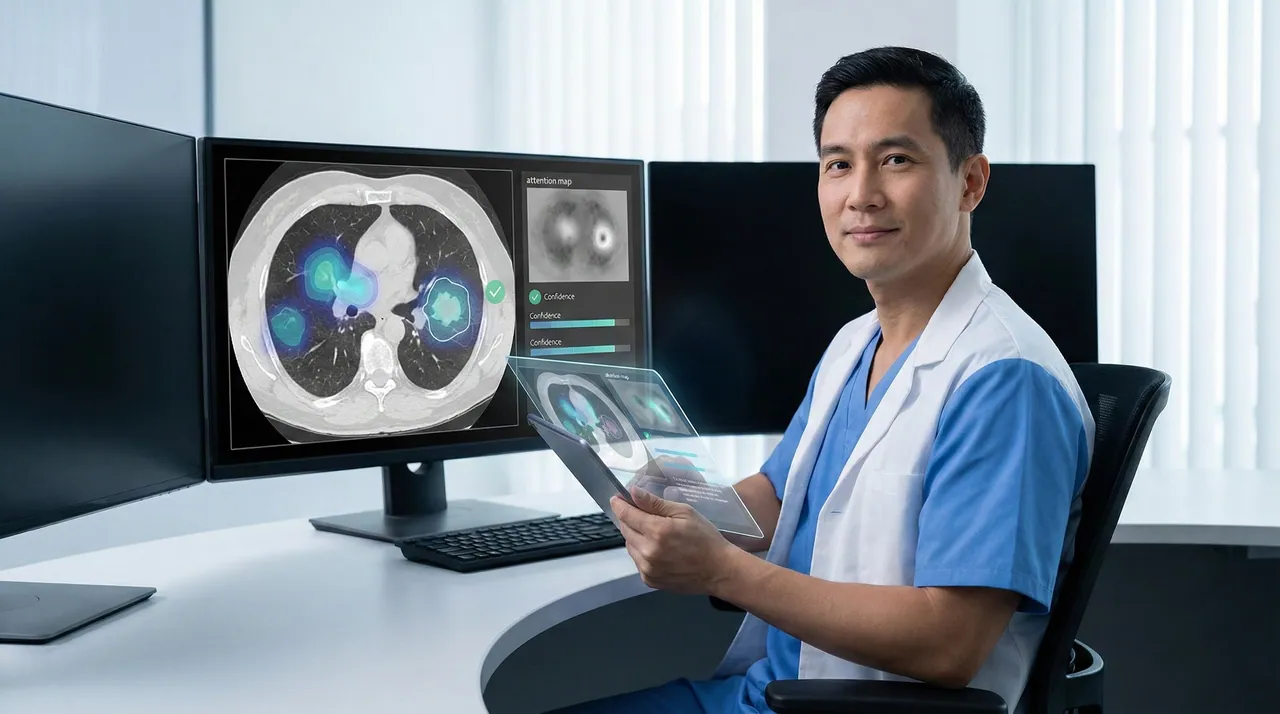
High performance metrics do not automatically translate into clinical trust. While accuracy is essential, clinicians must also understand how and why an AI system arrives at its conclusions.
Without interpretability, even highly accurate systems face resistance in clinical environments.
Managing false positives and false negatives
In cancer detection, diagnostic errors carry serious consequences. AI systems must carefully balance:
- Sensitivity to avoid missed diagnoses
- Specificity to reduce unnecessary follow-ups
Continuous validation against real-world data helps refine this balance over time.
The importance of explainable AI (XAI)
Explainable AI provides transparency into model reasoning by:
- Highlighting image regions influencing predictions
- Offering confidence scores and contextual indicators
- Enabling clinicians to verify AI-assisted findings
This transparency allows AI to function as a collaborative tool rather than a black box.
Building long-term clinical trust
Trust develops through consistent performance, clear communication, and responsible use. Healthcare organizations are more likely to adopt AI systems that:
- Demonstrate reliability across diverse populations
- Align with established clinical workflows
- Support, rather than override, professional judgment
7. Regulatory, Ethical, and Compliance Considerations
Navigating healthcare regulations
AI systems used in cancer detection must comply with stringent regulatory frameworks. These requirements vary by region but typically address:
- Clinical safety and efficacy
- Data handling and patient privacy
- Model transparency and validation
Regulatory readiness is essential for real-world deployment.
Ethical use of AI in oncology
Ethical considerations extend beyond compliance. Responsible AI development involves:
- Avoiding algorithmic bias
- Ensuring equitable performance across demographics
- Preventing over-reliance on automated outputs
Ethical design choices directly influence patient outcomes and public trust.
Security and data protection
Healthcare AI platforms must be designed with security in mind. This includes:
- Secure data pipelines
- Access controls and audit trails
- Ongoing monitoring for vulnerabilities
Data protection is critical not only for compliance, but also for maintaining institutional credibility.
Why compliance shapes adoption
For healthcare innovators, regulatory and ethical considerations often determine whether an AI system moves beyond pilot stages. Solutions designed with compliance in mind from the outset are far more likely to achieve sustainable adoption.
8. From Research to Real-World Deployment: Implementation Challenges
Bridging the gap between models and practice
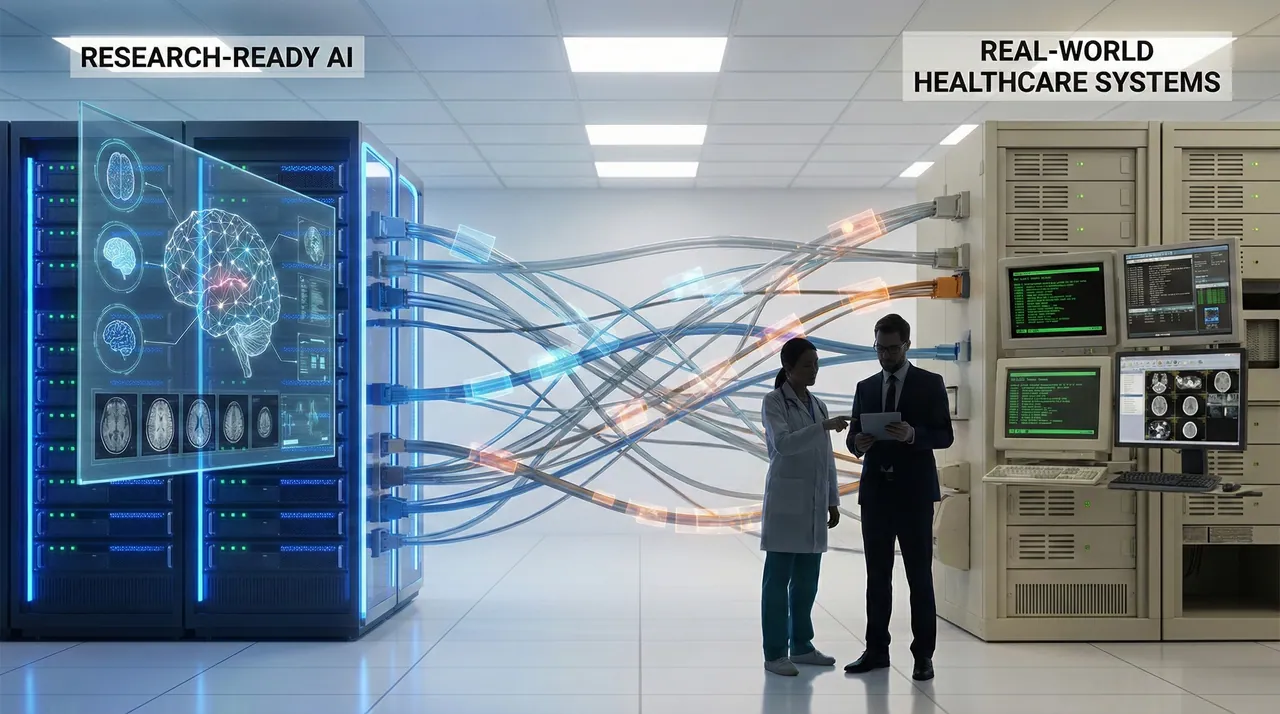
Many AI models perform well in controlled research settings but struggle in real clinical environments. This gap often arises due to differences in data quality, workflows, and operational constraints.
Deployment requires careful adaptation, not simple model transfer.
Common technical and operational challenges
Healthcare organizations frequently encounter:
- Fragmented data across departments
- Legacy systems with limited interoperability
- Infrastructure constraints for large-scale AI processing
These challenges must be addressed systematically to ensure success.
Adoption and change management
Even well-designed AI systems require thoughtful adoption strategies. Clinician engagement, training, and feedback are critical to building confidence and ensuring effective use.
AI tools that disrupt workflows or increase complexity are unlikely to gain traction.
What healthcare innovators should anticipate
Successful implementation depends on:
- Strong collaboration between clinical, technical, and operational teams
- Scalable infrastructure and long-term support
- Continuous monitoring and improvement post-deployment
For innovators, understanding these challenges early enables more realistic planning and more resilient AI solutions.
9. What Healthcare Innovators Should Consider When Building AI Imaging Solutions
Moving beyond proof-of-concept thinking
Many healthcare organizations begin their AI journey with pilots or research projects. While these initiatives are valuable, scaling AI-powered cancer imaging requires a shift in mindset—from experimentation to production-ready systems.
Innovators must think beyond model accuracy and focus on sustainability, integration, and long-term impact.
Build versus buy: making informed decisions
Healthcare leaders often face a choice between adopting off-the-shelf solutions or building custom AI systems. Each approach has trade-offs:
- Prebuilt tools can accelerate initial deployment but may limit customization
- Custom solutions offer flexibility but require deeper technical expertise and planning
The right decision depends on clinical goals, data availability, and organizational maturity.
Key technical and operational considerations
When designing AI imaging systems, innovators should evaluate:
- Data readiness and governance capabilities
- Infrastructure requirements (cloud, on-premise, or hybrid)
- Integration with existing clinical workflows
- Ongoing model monitoring and maintenance
Addressing these factors early reduces deployment friction later.
10. The Future of AI-Powered Cancer Detection
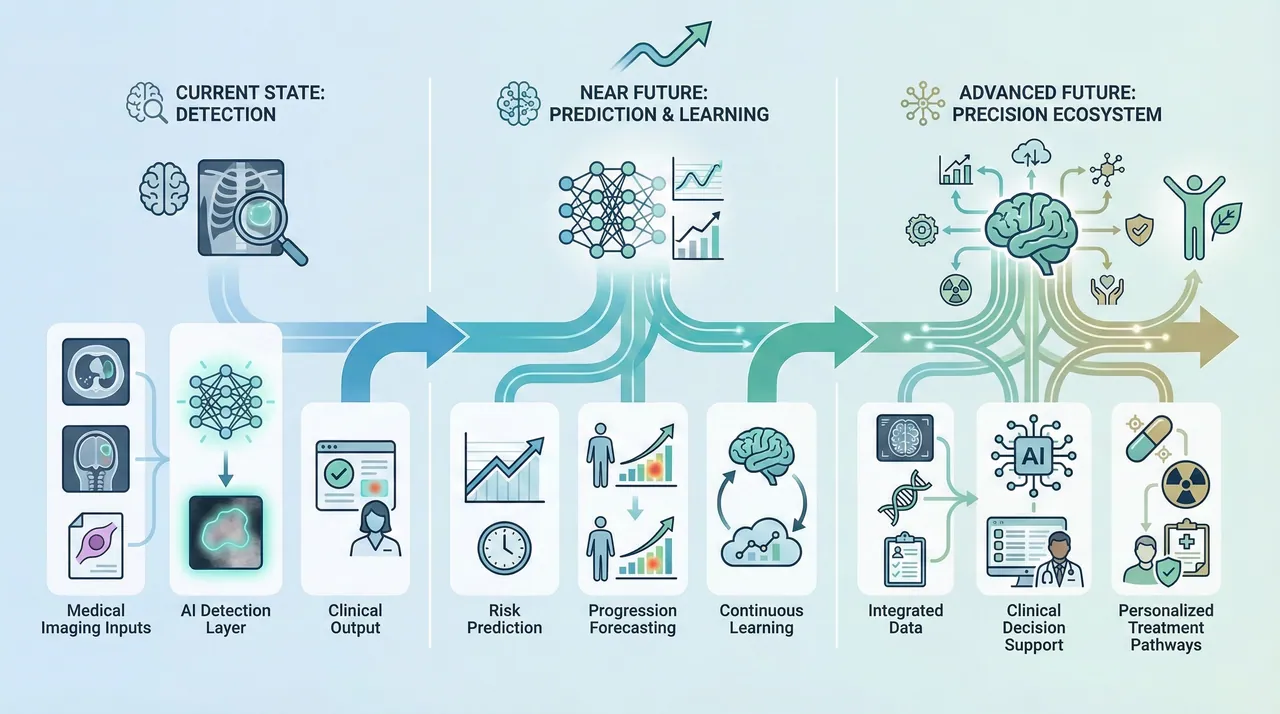
From detection to prediction
AI’s role in cancer imaging is expanding beyond identifying disease. Emerging systems aim to:
- Predict cancer risk before visible symptoms appear
- Anticipate disease progression
- Support personalized treatment planning
This shift moves AI from a diagnostic aid to a strategic component of precision medicine.
Foundation models and continuous learning
Large-scale AI models trained on diverse medical datasets are beginning to influence healthcare imaging. These foundation models can adapt across multiple use cases, reducing the need to build isolated systems for each cancer type.
Continuous learning mechanisms will allow AI systems to improve as new data becomes available, ensuring relevance over time.
AI as part of a broader clinical ecosystem
Future AI imaging solutions will not operate in isolation. They will increasingly integrate with:
- Clinical decision-support systems
- Genomic and molecular analysis platforms
- Population health and preventive care tools
This ecosystem approach enables more holistic and coordinated care.
What this evolution means for innovators
Healthcare innovators who invest in flexible, scalable AI architectures today will be better positioned to adapt as technology and clinical needs evolve. The future favors systems designed for growth, not just immediate results.
11. Conclusion: Turning Innovation into Meaningful Impact
Beyond technology adoption
AI-powered image analysis has already begun to reshape cancer detection, offering earlier insights, greater consistency, and new possibilities for patient care. However, the true value of AI lies not in adoption alone, but in thoughtful implementation.
Technology must align with clinical workflows, regulatory requirements, and ethical standards to deliver lasting impact.
A strategic opportunity for healthcare innovators
For healthcare innovators, AI represents an opportunity to rethink how diagnostic systems are built and delivered. Those who approach AI as a long-term capability—rather than a short-term trend—are more likely to achieve meaningful improvements in outcomes and efficiency.
Looking ahead
As AI continues to mature, its success in cancer detection will depend on trust, transparency, and collaboration between clinicians, technologists, and healthcare leaders. When implemented responsibly, AI-powered imaging systems can move healthcare closer to a future where cancer is detected earlier, treated more precisely, and managed more effectively.